
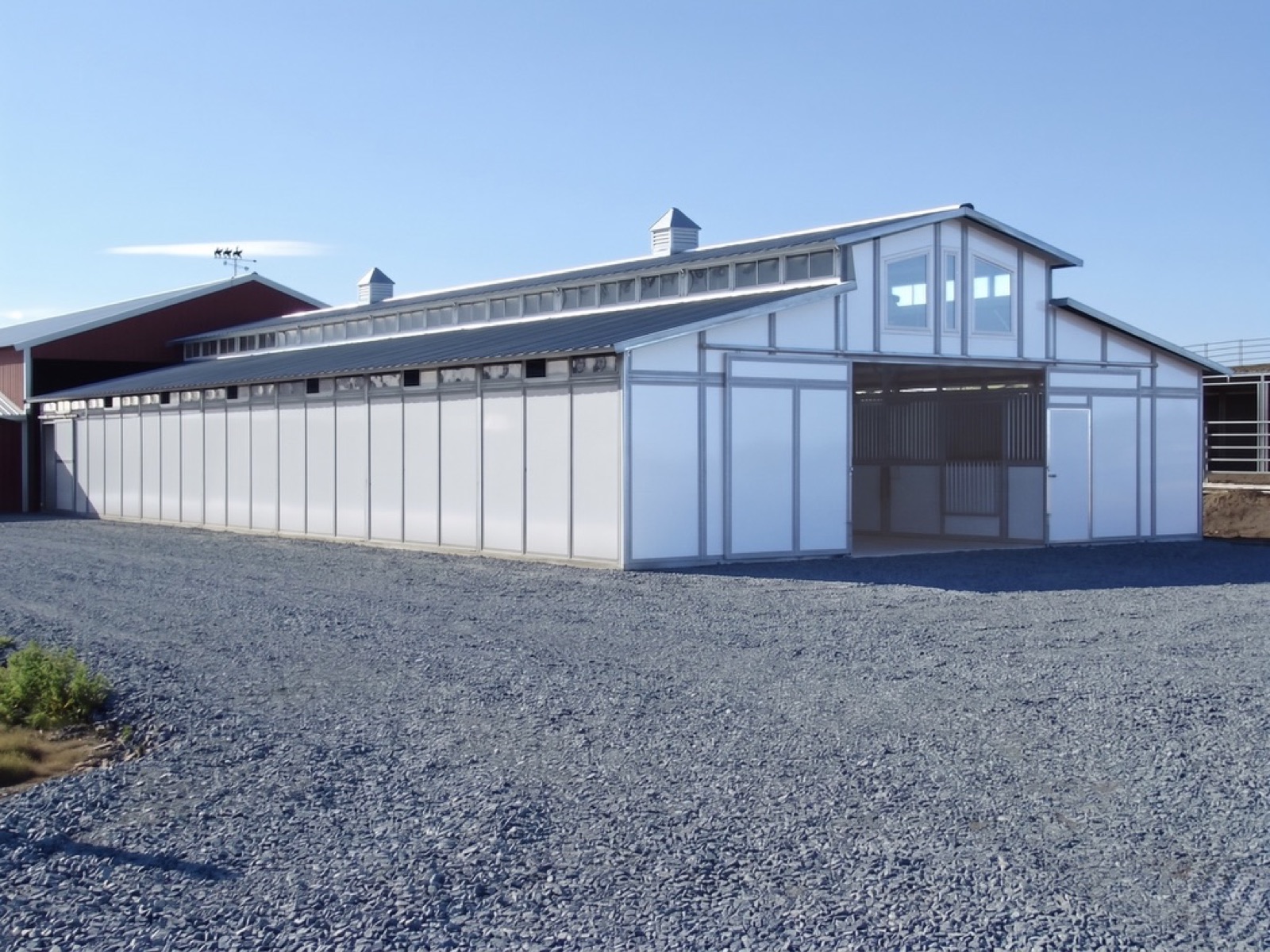
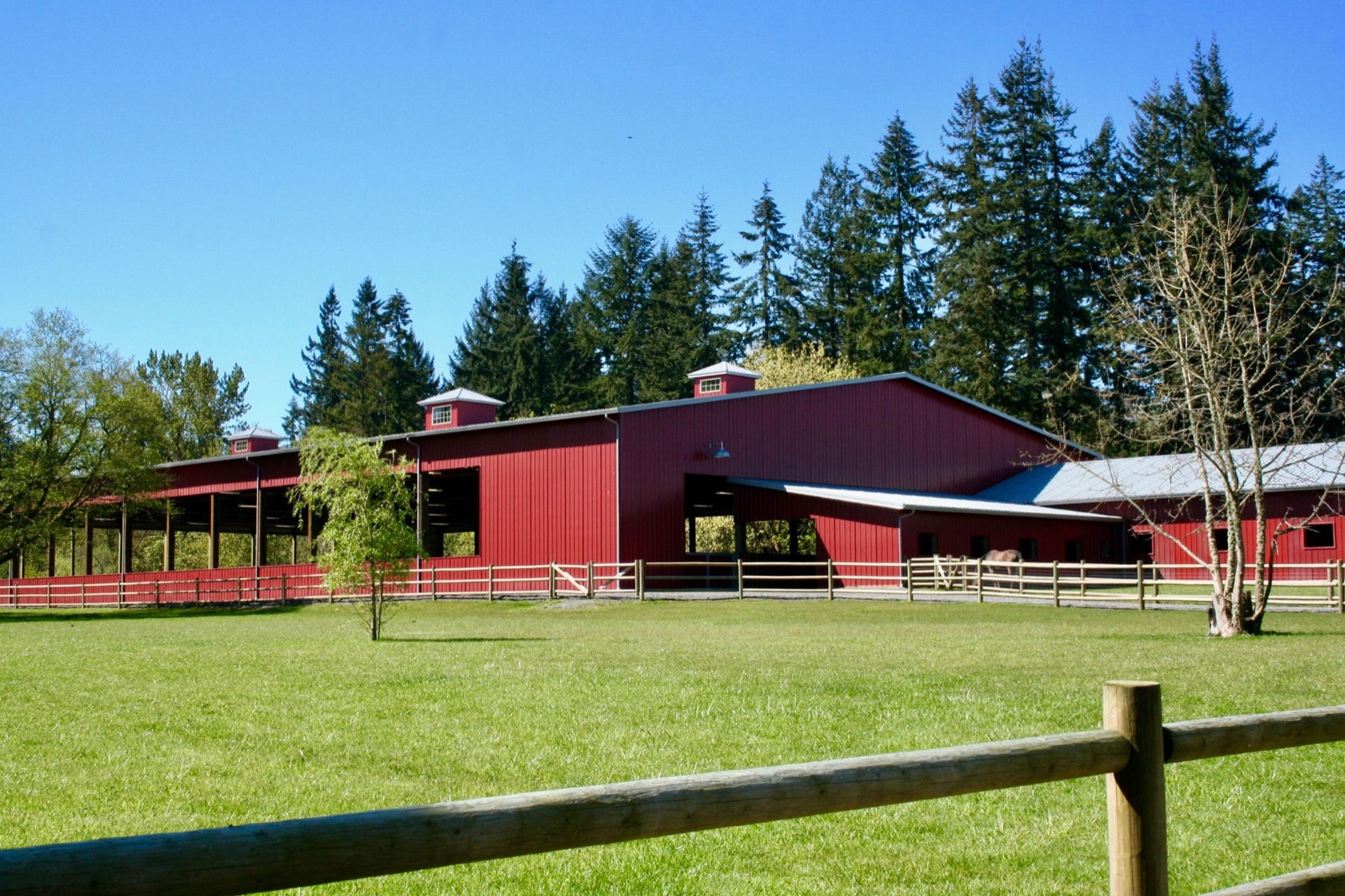
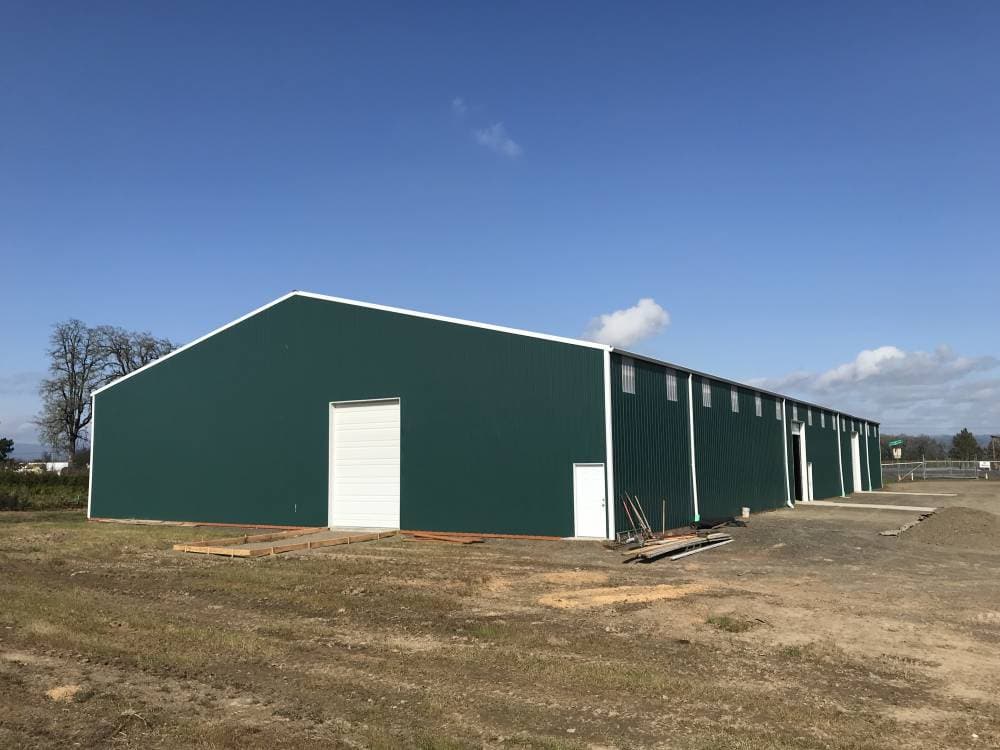
Ag-exempt and county-permitted buildings for working farms.
Hay storage, machine sheds, calving and lambing buildings, loafing sheds, dairy structures. Open, partially enclosed, or fully enclosed. We can usually qualify ag-exempt eligibility from your address and intended use, which keeps the front end short.
What we build
Hay storage
Roof-only or partially enclosed covers, sized for round bales or square stacks.
Machine sheds
Equipment and implement cover with sliding doors or roll-up openings.
Livestock barns
Stall barns, loafing sheds, calving and lambing structures with ventilation.
Working dairy structures
Milking-area cover, feed lanes, support buildings.
Multi-purpose ag shops
Combined storage, repair, and feed-processing buildings.
Open lean-tos and wings
Run-in shelter, additional cover added to existing barns.
Ag-exempt vs county-permitted
The agricultural exemption in Oregon and Washington lets qualifying parcels build agricultural-use structures without a full structural permit. That removes engineering cost, removes permit fees, and shortens the timeline by several weeks.
Ag-exempt path
- Parcel zoned for farm use
- Building used for agricultural production
- No structural permit required (county varies)
- Standard ag-exempt configuration
- Faster from contract to build
County-permitted path
- Required for non-ag use, residential, commercial
- Engineer-stamped plans, county review
- More flexibility on use over time
- Adds engineering cost and permit timeline
- Required if you might convert use later
Counties vary on how they read the exemption. We have worked through the differences in counties across Oregon and southwest Washington.
Who agricultural buildings are for
- Working farms expanding equipment cover
- Hay producers needing dry storage
- Livestock operators adding shelter
- Hobby and family farms on qualified acreage
- Dairy and small commercial ag operations
- Property owners adding ag use to undeveloped land
Common questions about agricultural buildings
What is the agricultural exemption?
In Oregon and Washington, qualifying parcels can build agricultural-use structures without a full structural permit. The exemption removes engineering and permit cost and shortens the front end of the project. Eligibility depends on parcel size, zoning, and the building being genuinely used for agricultural production — storage of hay, machinery, livestock, or feed. Counties vary on how they read the exemption, and we have worked through the differences across most of the regular service area.
Does my property qualify for ag-exempt?
Most rural acreage zoned for farm use will qualify; suburban lots and residential-zoned property generally will not. The cleanest answer comes from your county planning office, but we can usually tell from your address, your zoning, and what you plan to use the building for. We will flag eligibility one way or the other during the project review.
How big can an ag-exempt building be?
There is no fixed maximum size on an ag-exempt building in Oregon — the limit is whether the building is genuinely used for agriculture. Most ag buildings we put up run 40×60 to 80×144. Some counties require notification or a record-only filing for larger ag buildings; that varies by county and we handle it during the permit step.
Can I store non-agricultural equipment in an ag-exempt building?
The building has to be in agricultural use to qualify. Mixing in personal storage (an RV, a project car, household items) puts the exemption at risk if a county officer ever follows up. If you want flexible-use storage, a county-permitted building is the safer path — we build that route too.
What about livestock buildings — do they need ventilation?
Yes. Livestock buildings need active or passive ventilation matched to the animals and stocking density. We typically build with continuous ridge vents, open eave soffits, and dutch-door or sliding-door openings sized for airflow. Stall barns get more attention to ventilation than open hay covers.
Can I convert an ag building to something else later?
Sometimes. If the building was built ag-exempt, converting to non-ag use typically requires a permit-after-the-fact and may require structural retrofits. If you might want to change use later, county-permitting the original build is easier and cheaper than retrofitting.
Ready to start your project?
Tell us about your land, your use, and your timeline. We typically respond within one business day.