
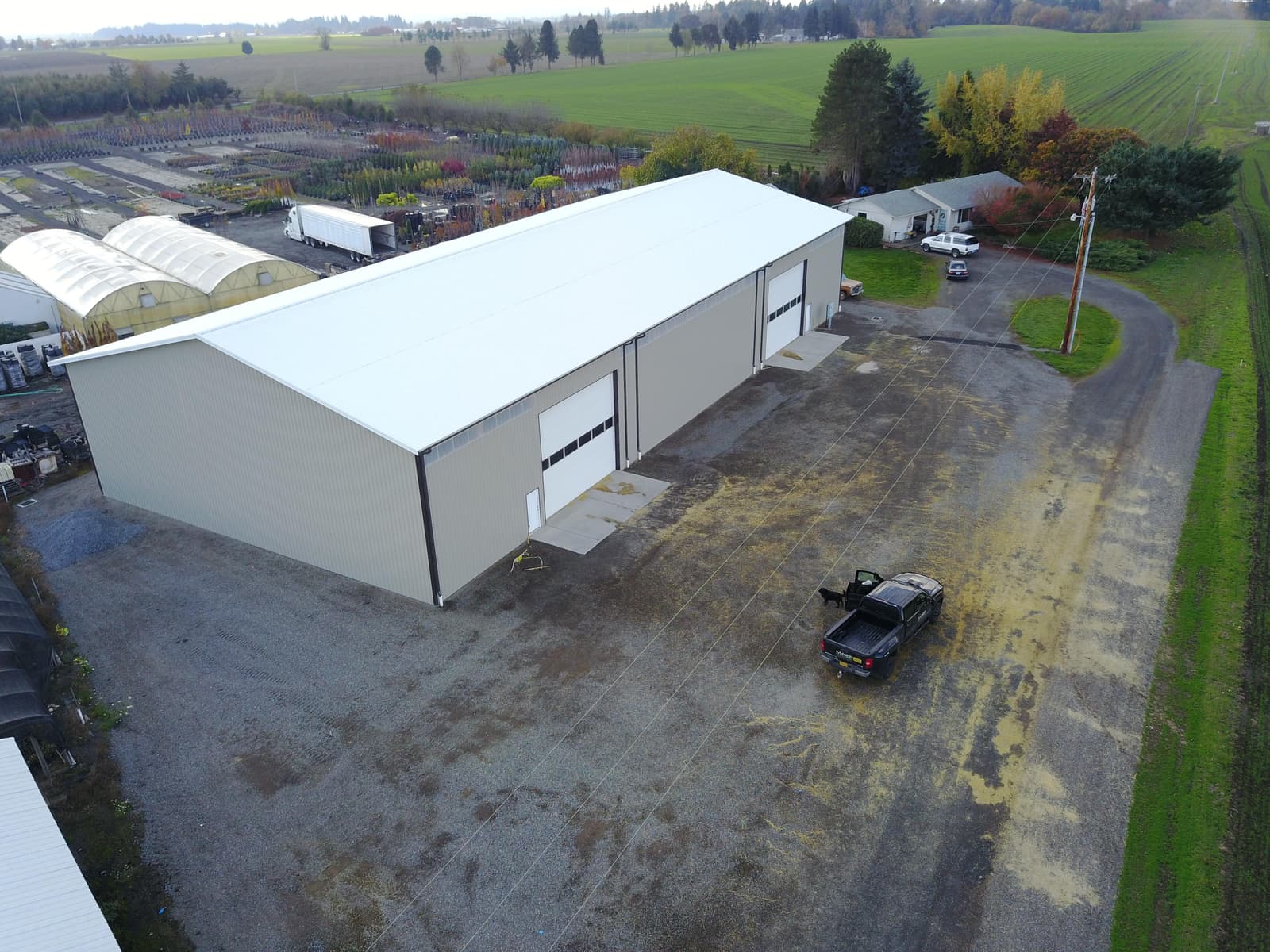
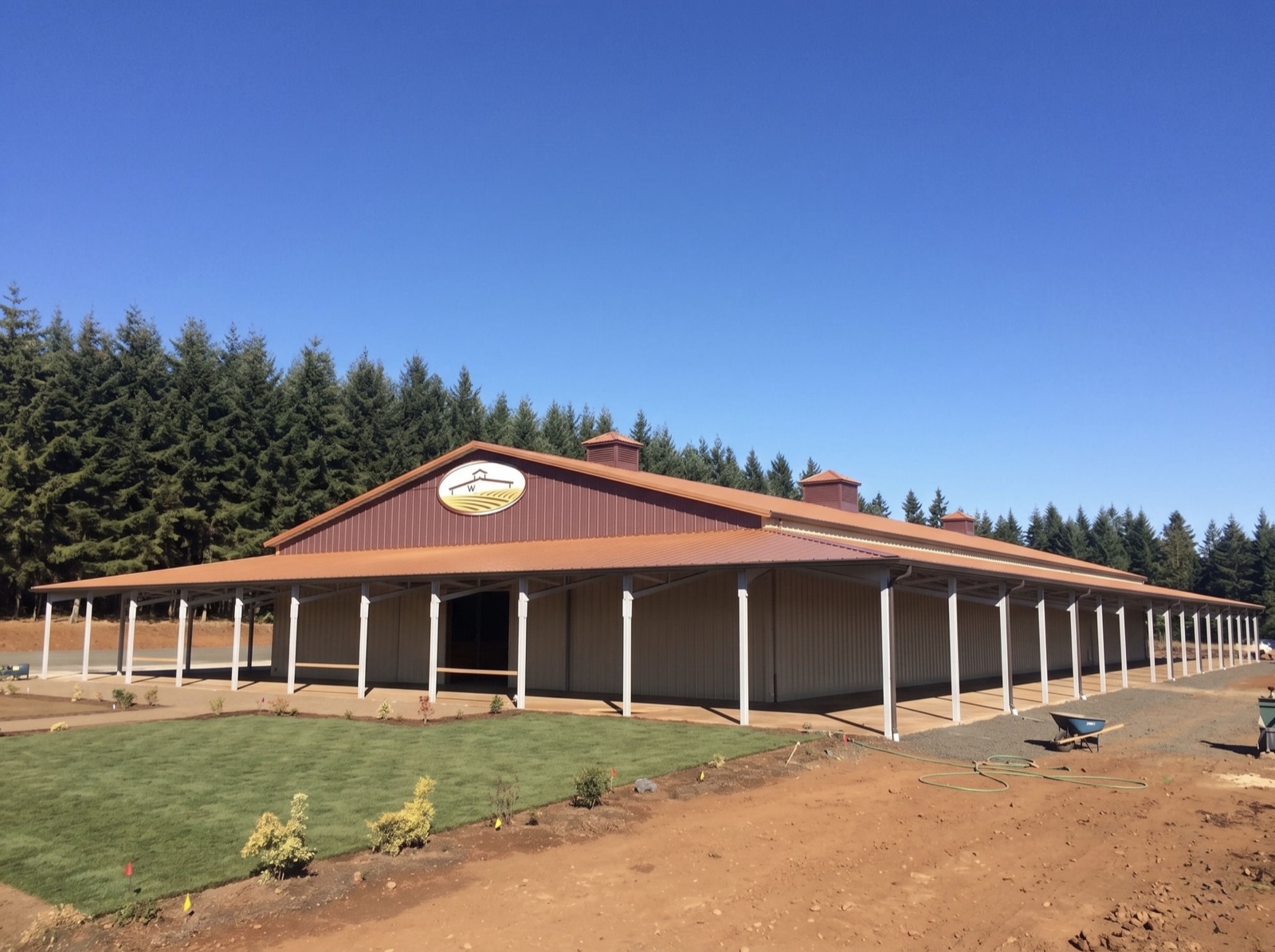
Steel-frame buildings, built in-house.
Post-frame is one of the two ways we build; steel-frame (red-iron) is the other, and we have built in steel for years. When a project's span, eave height, or heavy-use program points to steel, we build it in steel — raised by our own crews, with the same one-point-of-contact process as every job we run.
Where steel earns its keep
Large clear-span industrial
Spans beyond what standard post-frame trusses carry economically, with no interior columns.
Tall-eave warehouses
High-bay storage and distribution where the eave climbs well past the typical post-frame range.
Heavy-use commercial
Structures built for industrial loads, equipment, and hard daily use.
Steel and post-frame hybrids
Wide-span buildings that mix post-frame with steel or glulam members where the span needs them.
Steel or post-frame — how we decide
We build both, so the recommendation is about your project, not about which product we happen to sell. A few questions usually settle it:
Span
How wide?
Up to roughly 80 feet, post-frame is usually the value pick. Past that, steel and hybrid systems start to make sense.
Height
How tall?
Standard eaves favor post-frame. Very tall, high-bay buildings often favor steel.
Use
How hard a life?
Farm, shop, and equestrian use suit post-frame. Heavy industrial programs can justify steel.
Read the full comparison in the post-frame vs steel guide.
Common questions about steel buildings
Do you build steel-frame buildings yourself?
Yes. Steel-frame (red-iron) construction is one of the two ways we build, alongside post-frame, and we have built in steel for years. The structure is raised by our own crews, the same way we run a post-frame job — one point of contact from quote to finished building.
When does a steel building make more sense than post-frame?
When the project needs a very large clear span, a very tall eave, or a structure built for heavy industrial use. Post-frame is the more cost-effective answer for most farm, shop, and equestrian work; steel earns its premium on big industrial spans and tall buildings where the engineering favors it. We will tell you straight which framing fits your span, budget, and use rather than pushing one or the other.
Can you combine steel and post-frame?
Yes. Wide-span buildings are often a hybrid — post-frame with glulam or steel members where the span needs them. We size the structure to the project, which sometimes means all post-frame, sometimes all steel, and sometimes a combination.
What size does a steel building make sense at?
There is no fixed line, but steel tends to win as spans push past what standard post-frame trusses handle economically, as eaves climb well above the typical 18 feet, and as the use turns heavy-industrial. Below that, post-frame usually costs less for the same enclosed space. We size and recommend during the project review.
How is a steel building priced?
The same way we price any project — a clear base price plus itemized additions, written after a project review. We do not publish figures because span, height, finish, and site conditions move the number too much for a catalog price to mean anything. Send your program through the quote form and we will put a real number on it.
Ready to start your project?
Tell us about your land, your use, and your timeline. We typically respond within one business day.