
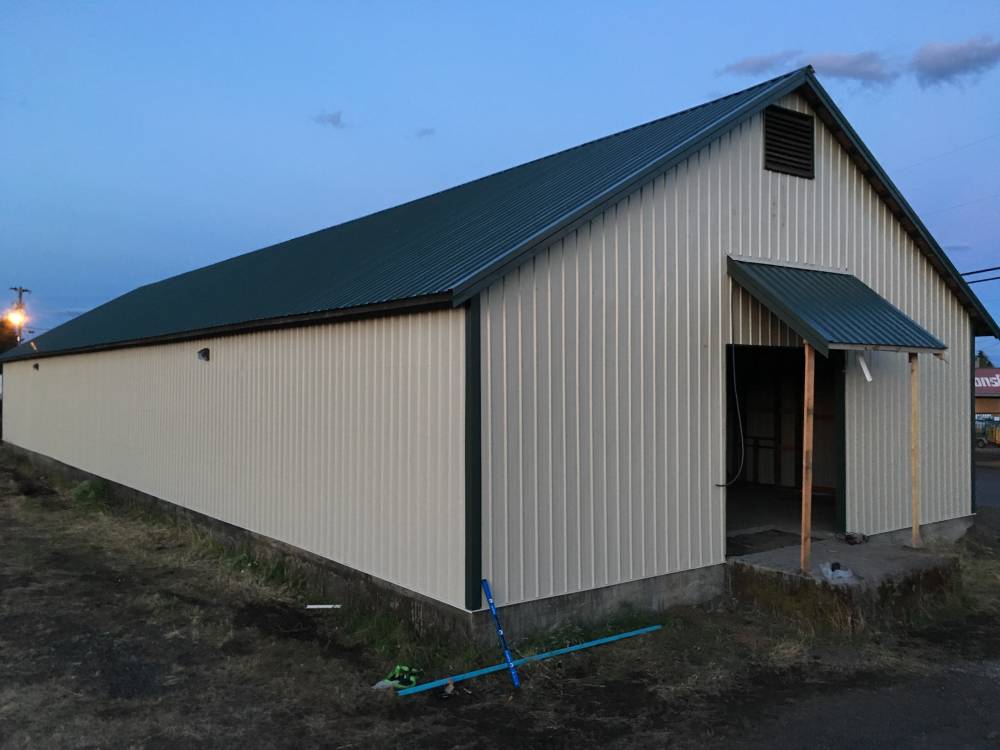
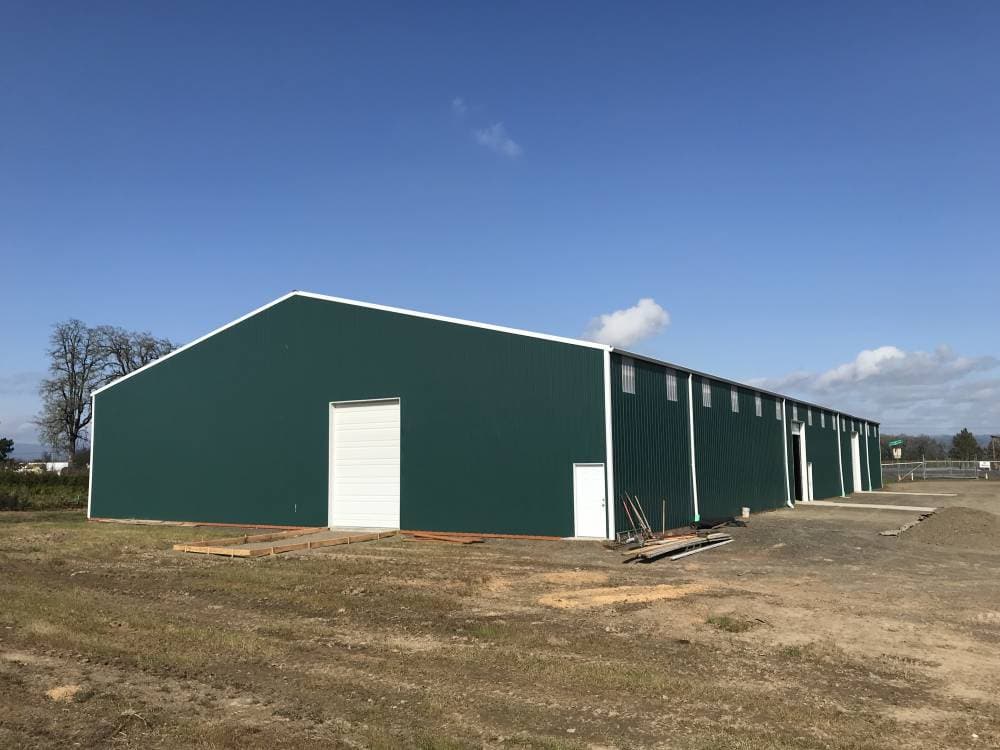
Simple, durable storage shells — open, partial, or fully enclosed.
The same post-frame structure that holds up a riding arena or a commercial warehouse works for straightforward storage: RV cover, equipment storage, multi-bay warehousing, cold storage. Strip out the additions and the build moves fast.
What we build
RV and motorhome cover
Roof-only or partial enclosure, 14- to 16-foot eaves for tall units.
Boat and trailer storage
Open or partial enclosure, single-bay or multi-bay.
Equipment and implement storage
Tractors, fleet vehicles, trailers, attachments.
Multi-bay storage
Mini-storage-style layouts with individual roll-up doors and interior divisions.
Cold storage
Insulated shells for orchard, beverage, or controlled-environment ag.
Hay and feed storage
Roof-only ag covers, sized for round or square stacks.
Three enclosure levels
Roof-only
Cheapest path
Posts, trusses, roof. No walls. Works for equipment that does not need full weather protection.
Partially enclosed
PNW practical
End walls only, no side walls. Blocks driving rain through the gable ends. Good middle ground for the Willamette Valley winter.
Fully enclosed
Full weather protection
Walls and roof. Standard shell for anything that needs to stay dry. Insulation and slab are common additions on top.
Who storage buildings are for
- RV and motorhome owners
- Boat owners
- Farmers needing equipment cover
- Small businesses with seasonal inventory
- Mini-storage operators
- Cold-storage operators (orchard, beverage)
Common questions about storage buildings
How tall should a storage building be for an RV?
A Class A motorhome with a roof-mounted AC unit typically needs 14 feet of clear door height, which means a 16-foot eave on the building. Smaller travel trailers and fifth wheels usually fit under a 12-foot eave with a 10- or 12-foot door. If the RV will live in the building long-term, build in a foot of breathing room above the AC unit.
Roof-only or partially enclosed — which is right for me?
Roof-only is the cheapest path and works for equipment that does not need full weather protection: tractors, RVs that get used regularly, boats. Partial enclosure (end walls, no side walls) blocks driving rain in PNW winters without the cost of full siding. Full enclosure is for anything that needs to stay dry and reasonably temperature-stable.
Can you do cold storage?
Yes. Insulated storage shells with controlled-temperature interiors work fine in post-frame construction. The insulation package, vapor handling, and any active cooling go beyond a standard shell, so we size and quote them as additions. Common uses: orchard storage, beverage storage, controlled-environment ag.
Multi-bay layout — what is typical?
Most multi-bay storage buildings run 30 to 60 feet wide with 12- to 14-foot bays between posts. Interior wall divisions and individual roll-up doors split the bays into separately accessible units. We have built mini-storage-style layouts and single-tenant multi-bay buildings for fleets and equipment.
How is this different from a shop?
A shop is built for someone to work inside — typically with insulation, a slab, doors sized for vehicles, and rough-ins for electrical and plumbing. A storage building is built to keep something out of the weather, which usually means a simpler shell, fewer doors, and less interior finish. Many customers pick storage construction now and convert to shop later by adding the shop additions on top.
Can the storage building be ag-exempt?
If the parcel is zoned for farm use and the building is genuinely used for agricultural storage — hay, equipment, feed — then yes. Mixed-use storage (personal RV plus farm equipment) puts the exemption at risk. We will flag eligibility during the project review.
Ready to start your project?
Tell us about your land, your use, and your timeline. We typically respond within one business day.