
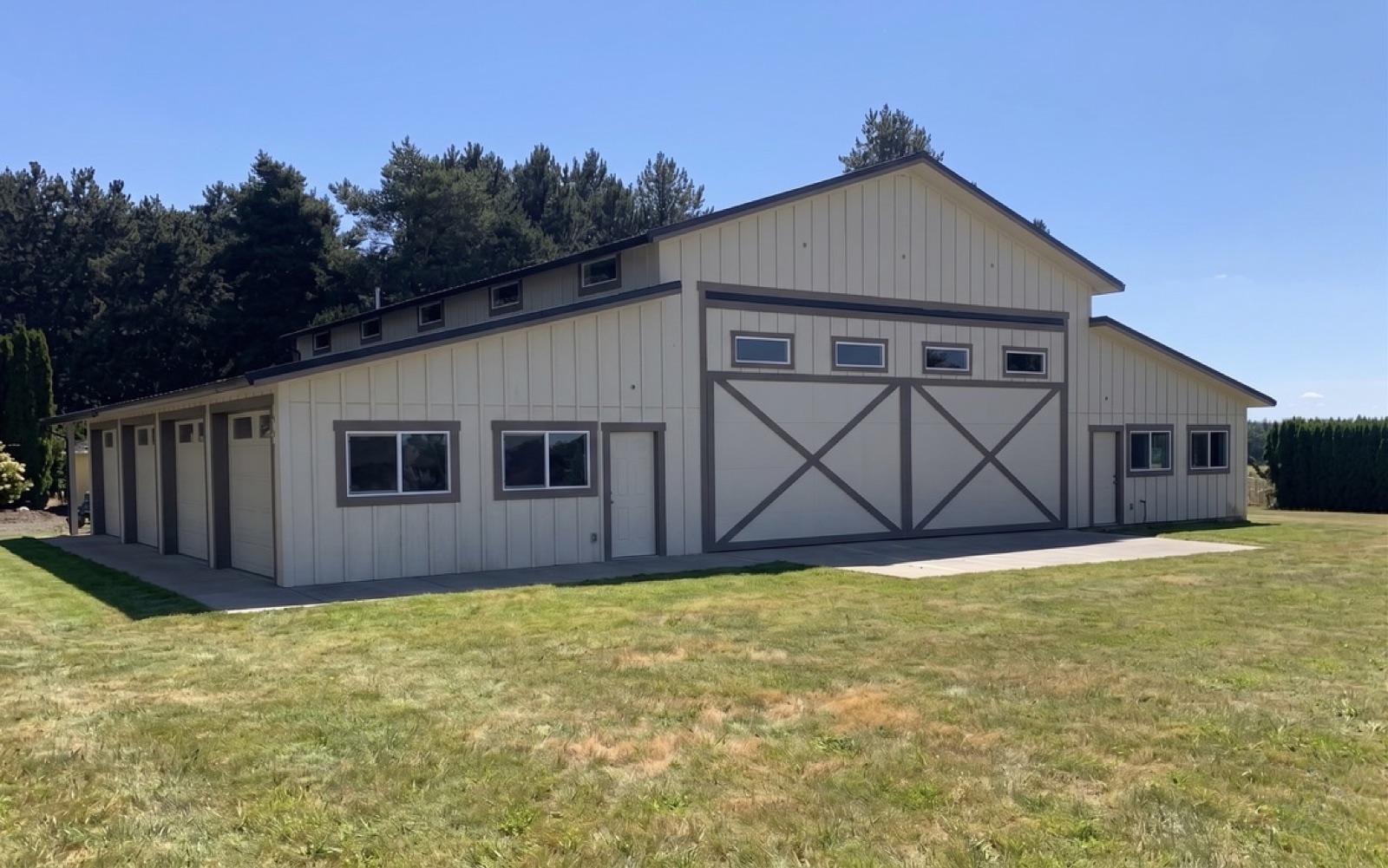
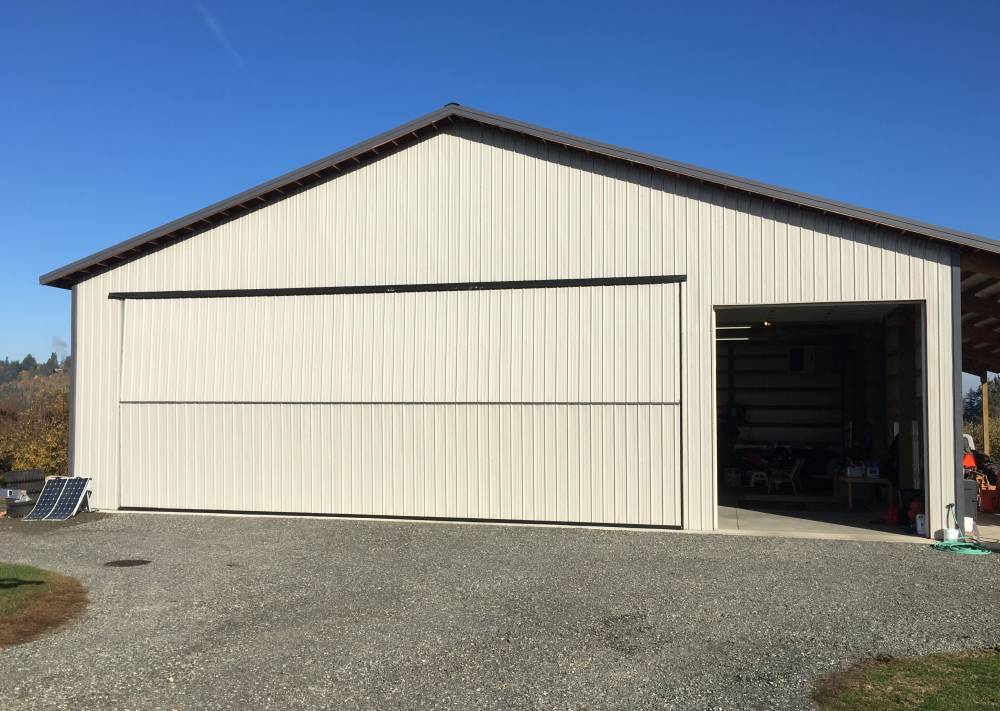
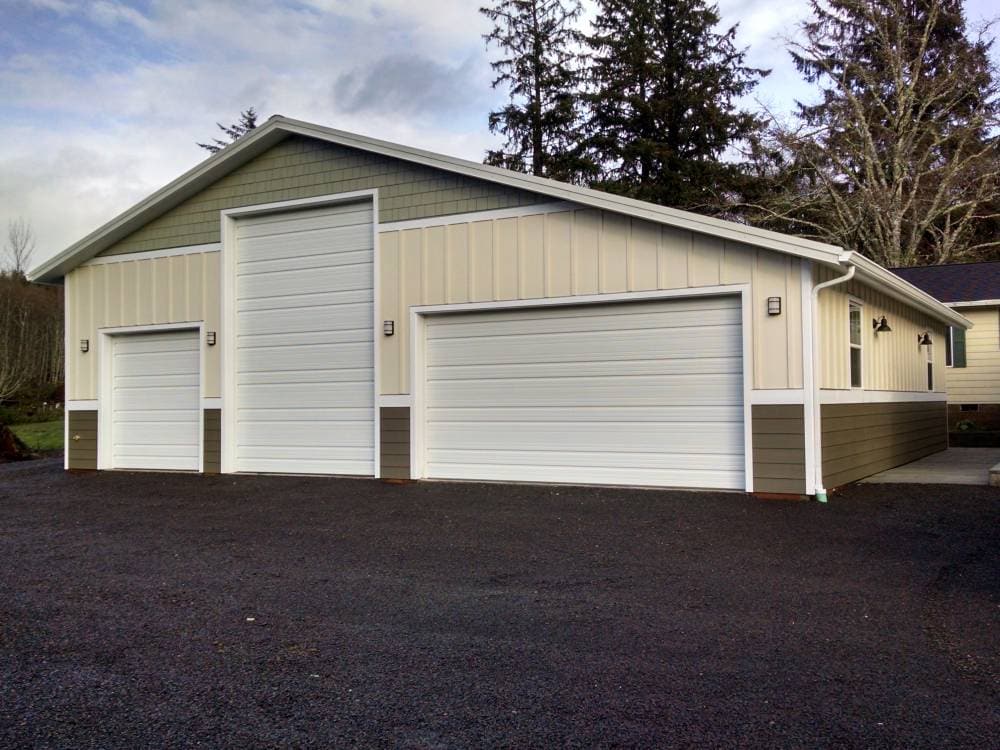
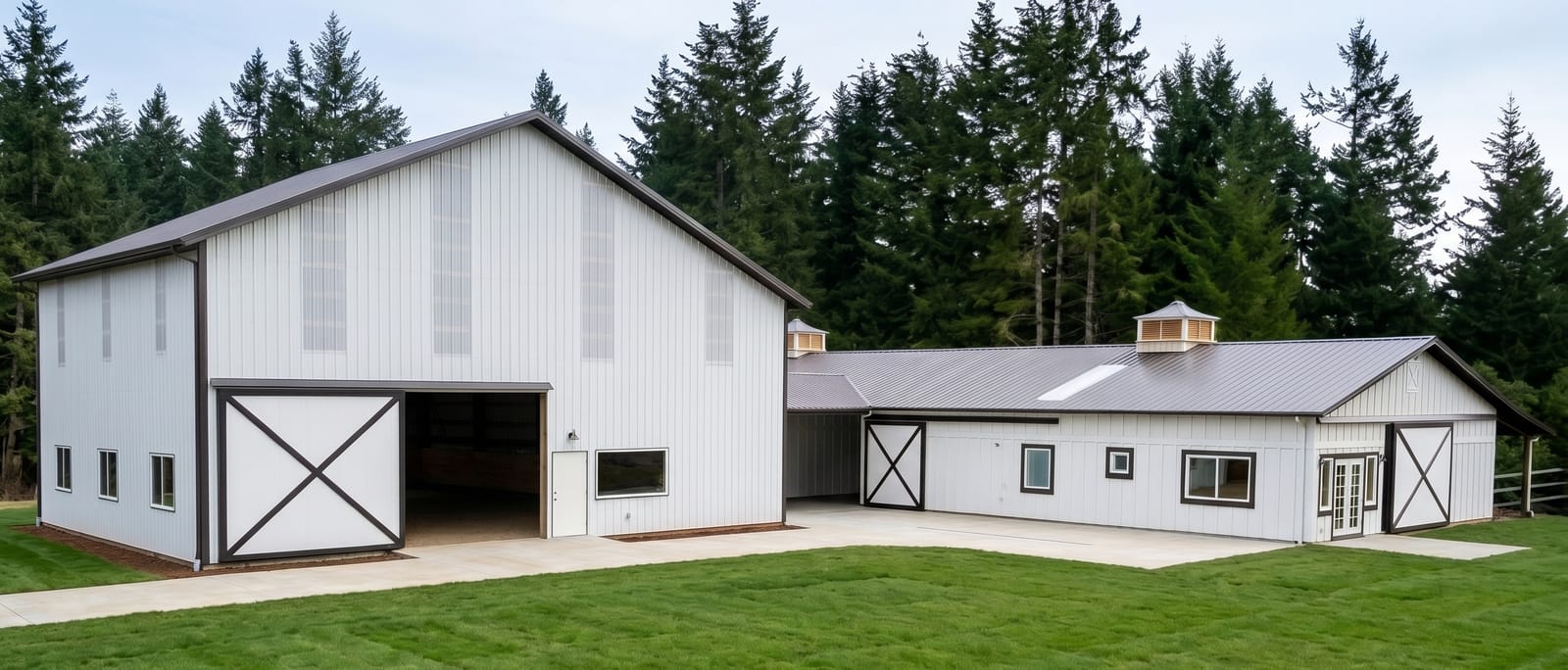
Shops and garages built around how you actually use the space.
Post-frame is the practical way to build a shop on rural acreage or a suburban lot — fast to put up, easy to insulate later, and sized to your equipment and use case rather than a stock plan.
What we build
Single-bay hobby shops
24×36 to 30×48 — woodworking, project car, gunsmithing, garden tools. Insulation-ready or insulated.
Multi-bay garages
30×48 to 50×80 — daily drivers, project vehicles, and bench space under one roof.
RV and motorhome storage
14- to 16-foot doors and 16-foot eaves so the AC unit clears.
Mechanic and home-trade shops
Sleeves for lifts, electrical, compressed air, and exhaust ventilation.
Agricultural workshops
Ag-exempt eligible on qualified parcels — saves engineering and permit cost.
Working trades shops
For contractors, landscapers, mechanics, welders running their business from home.
Who shops and garages are for
- Rural homeowners with the room for a real shop
- Hobbyists working on cars, woodworking, restoration
- RV and motorhome owners who want their rig under cover
- Tradesmen running their business from a home shop
- Property owners consolidating tools and equipment
- Small business owners adding a workspace on existing land
What's in the base, what gets added
Base shop package
- Post layout sized to span and use
- Treated posts on a footing, gravel backfill and a concrete collar
- Clear-span trusses
- Steel roofing and siding in your chosen color
- One man door, eave overhang, drip edge, ridge cap
Common shop additions
- Concrete slab, sized for what you keep in the shop
- Overhead doors per bay (insulated or non-insulated)
- Windows and additional man doors
- Insulation packages — walls, roof, or both
- Vapor barrier, OSB liner, drip-stop roof underlayment
- Sleeves for electrical, compressed air, plumbing
- Wainscot, cedar siding, board-and-batten upgrades
- Skylights, cupolas, polycarbonate eave panels for daylight
Common questions about shops and garages
What size shop should I build?
Most personal shops land between 24×36 and 40×60. Single-bay hobby shops usually start at 24×36 with a 12-foot eave. Two-bay shops with workspace and parking often run 30×48 to 36×60. RV and motorhome storage typically needs at least 16 feet of eave and 14 feet of door height. We will size the building against what you plan to keep in it and the space you have on the parcel.
Can I insulate the shop later?
Yes, but it is cheaper and cleaner to plan insulation into the original build. Adding insulation later requires furring out the girts, installing a vapor barrier, and finishing the interior — all of which we can quote as additions on day one. If budget is tight, build with insulation-ready spacing now and add the package later.
Do you pour the concrete slab?
We coordinate the slab; the pour itself is handled by a concrete subcontractor. Most customers want the slab sized and reinforced for what they actually plan to roll in and out — a slab thick enough for an RV is different from one for hobby woodworking. We arrange the coordination so the slab is ready when the framing crew arrives.
How tall can the eave be?
Standard eave heights run 10, 12, 14, and 16 feet. Some shops go higher when an RV with a tall AC unit or a tractor with a cab needs clearance plus an interior lift. Going taller affects post and truss sizing and adds cost, but it is regularly done. Tell us what is going inside and we will size up from there.
Can you sleeve for electrical and plumbing?
Yes. We rough-in the openings, sleeves, and access points your electrician and plumber need to land their trades. The trades themselves are licensed work and run separately, but we coordinate so the slab pour and framing leave clean paths for them.
How long does a typical shop build take?
One to ten weeks on-site is typical for an ag-exempt or simple permitted shop, weather depending. Larger shops with concrete, insulation, and multiple overhead doors push toward the high end of that range. The full timeline goes into the written quote.
Ready to start your project?
Tell us about your land, your use, and your timeline. We typically respond within one business day.