
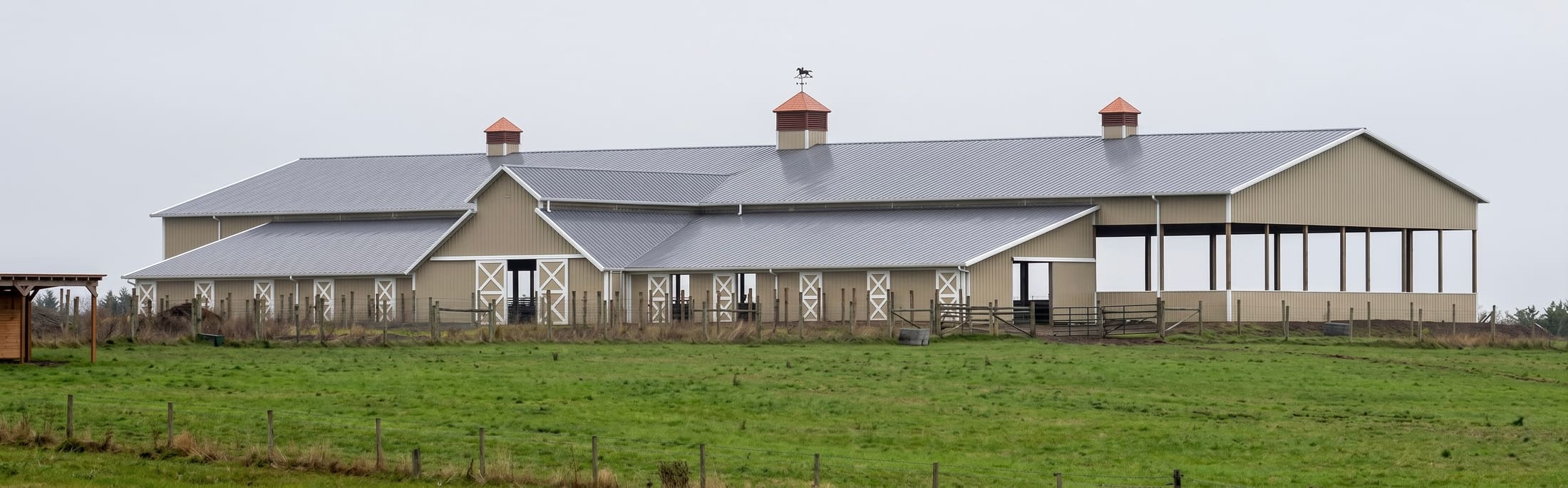
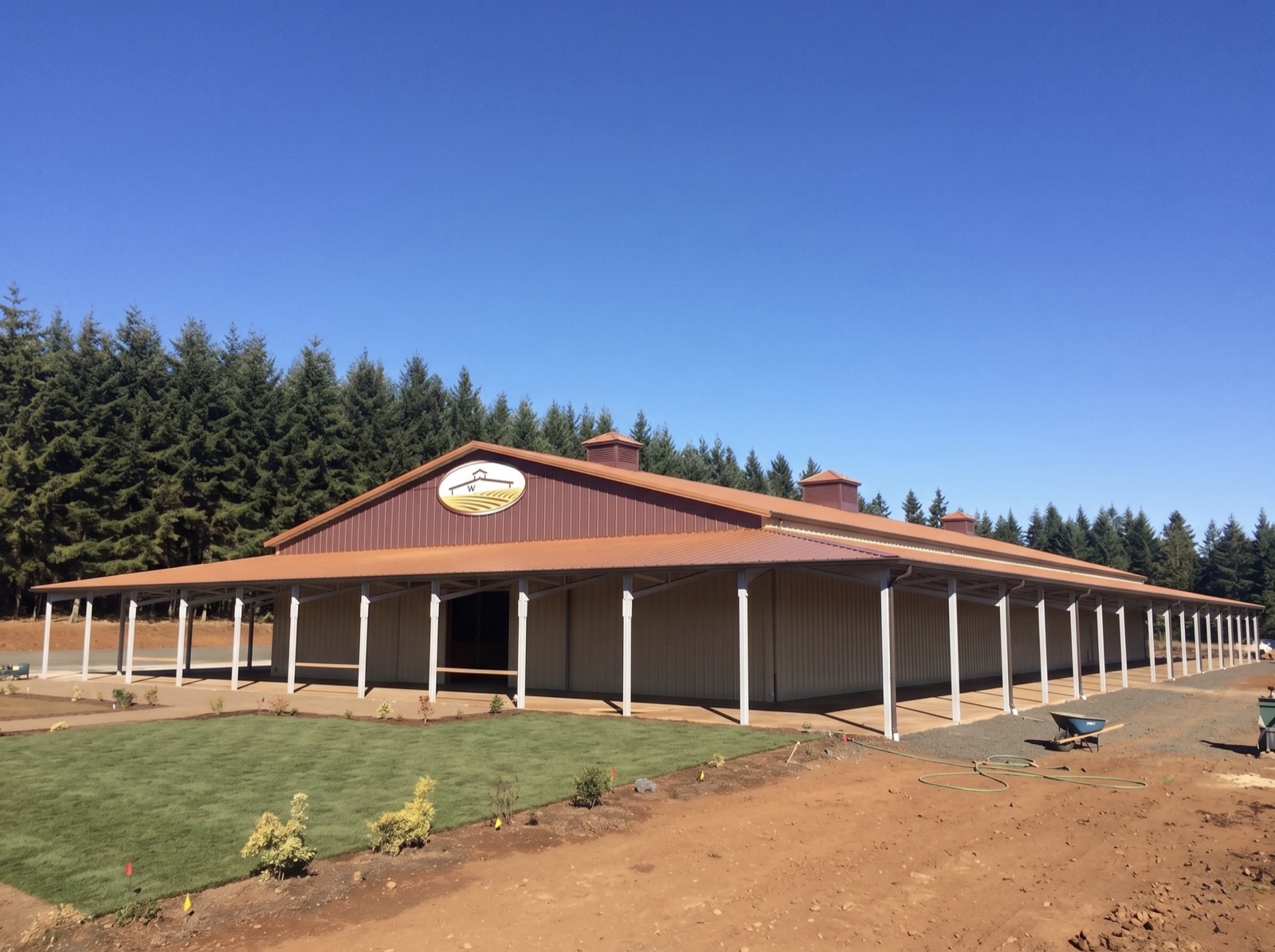
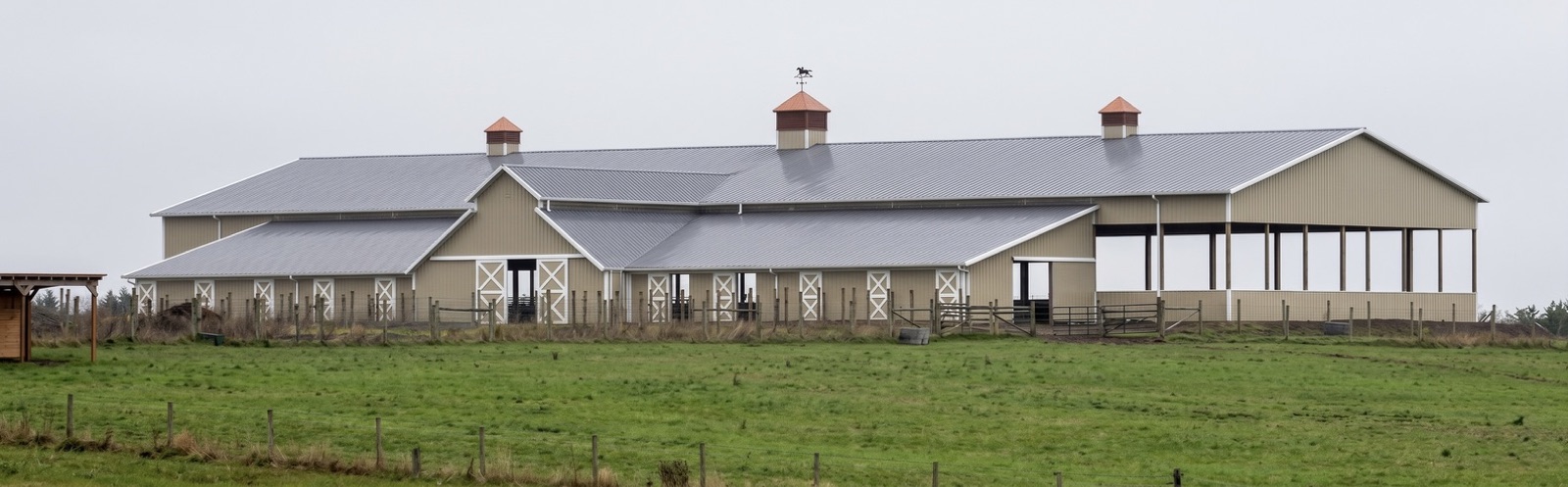
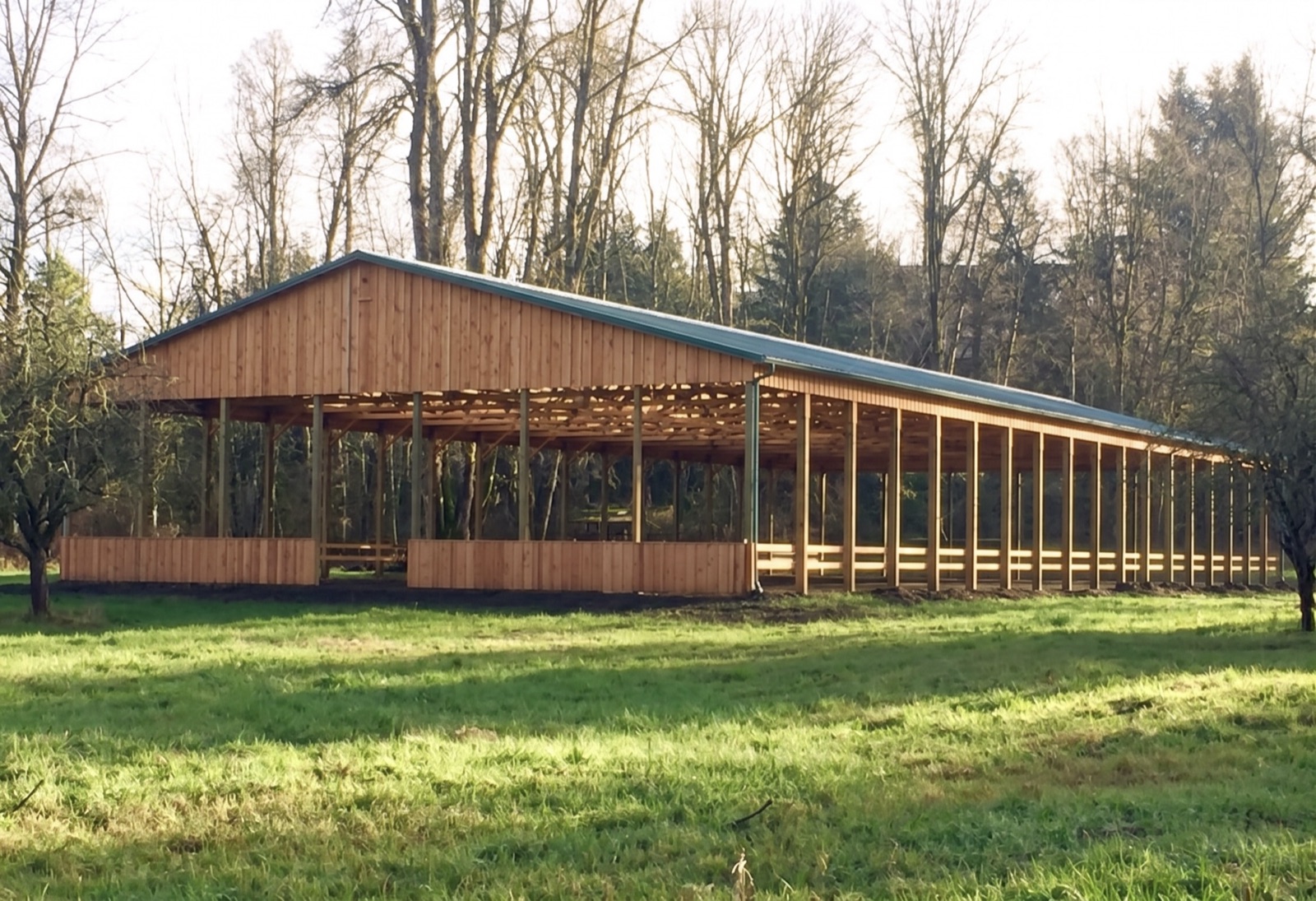
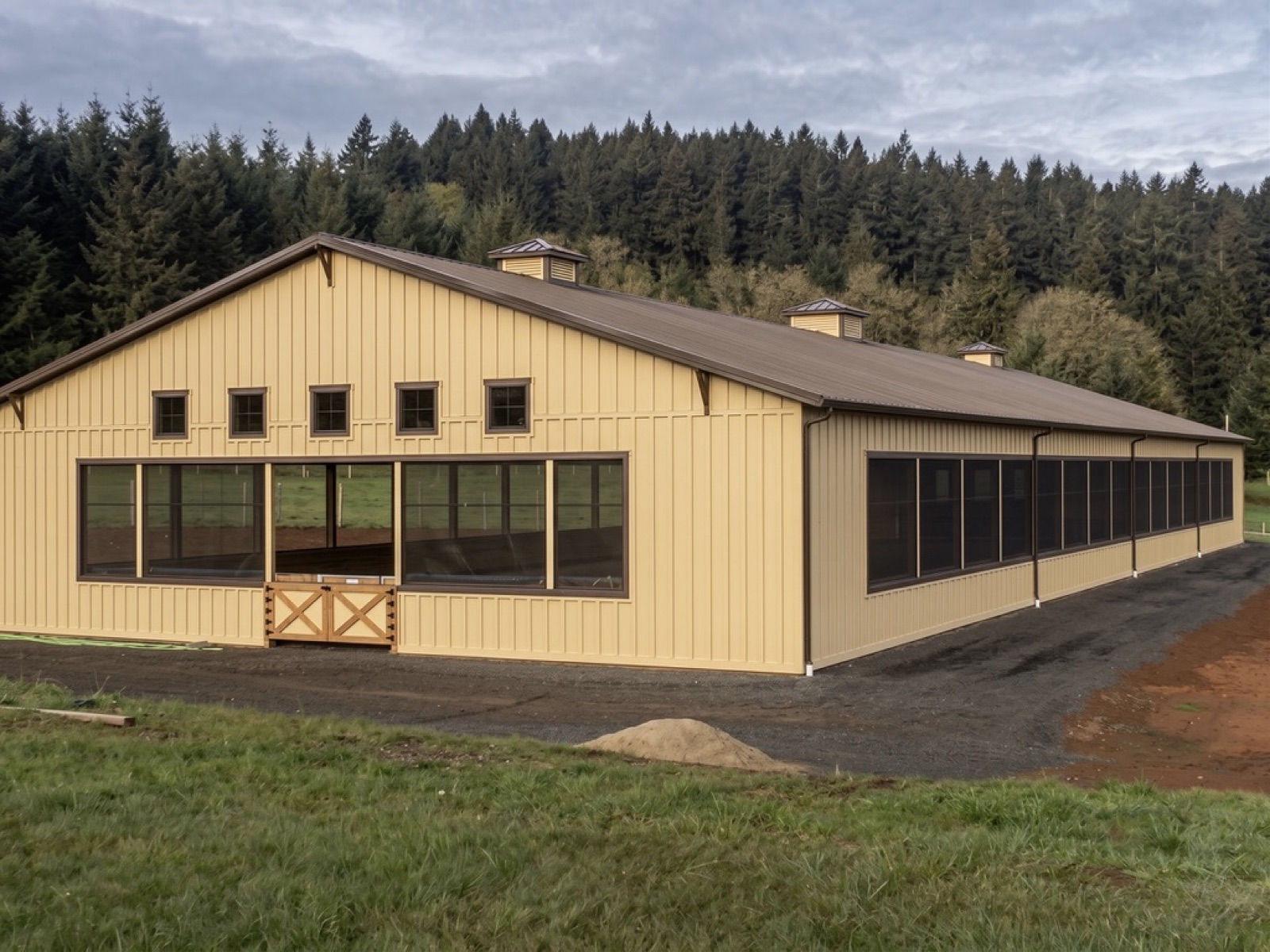
Riding arenas and stall barns, designed around your horses.
Clear-span riding arenas with no interior posts, stall barns and monitor barns, attached run-in wings, tack rooms, and wash bays. The same crew has put up boarding facilities, private arenas, training barns, and breeding operations across the Pacific Northwest.
What we build
Covered riding arenas
From private arenas to full competition facilities, any size you need. Clear-span, no posts in the riding area.
Stall barns
From a few stalls to a full boarding barn, center-aisle or shed-row layout.
Monitor barns
Center hayloft with shed-row stall wings on each side.
Attached run-in wings
Lean-to additions along the length of an arena for stalls and shelter.
Tack rooms and wash bays
Integrated into the barn or arena envelope, with sleeves for plumbing and electrical.
Hay and equipment storage
On-property storage for hay, shavings, and tractors, kept separate from horse housing.
Who equestrian buildings are for
- Boarding facility owners
- Training and lesson programs
- Private equestrian property owners
- Breeding and stallion operations
- Pony clubs and 4-H facilities
- Veterinary and equine medical facilities
What's in the base, what gets added
Base arena or barn package
- Post layout, sized to span
- Clear-span trusses (or glulam combinations for spans over 80')
- Standard 14- to 16-foot eave for arenas
- Steel roofing and siding
- Eave overhangs, ridge cap, drip edge, trim
Common equestrian additions
- Polycarbonate eave panels for natural daylight
- Attached lean-to or wing for stalls
- Stall fronts and Dutch doors
- Interior kickwall or wainscot
- Tack room and wash bay with rough-in sleeves
- Sliding doors at gable ends, sized for tractor access
- Cupolas and ridge ventilation
- Insulation packages for cold-weather facilities
Common questions about riding arenas and stall barns
How big should my riding arena be?
There is no fixed size — MPB builds arenas as big or as small as your horses, discipline, and property call for. A compact private arena often runs around 60×120, a serious training and lesson facility around 80×144 to 80×200, and competition facilities 100×200 or larger. We size it with you during the project review.
What about footing — do you handle the sand?
No. Arena footing is its own specialty — the right blend, the right depth, the right base prep — and we leave it to footing specialists who do it full-time. We build the envelope and coordinate the grading so the footing crew can do their work cleanly.
Can you build stalls into a riding arena building?
Yes. The most common pattern is a clear-span riding area with an attached lean-to or wing that runs the length of the arena and holds the stalls. That keeps the riding area free of columns while putting stall amenities under the same roof. We have built many of these and the wing-on-arena layout is well-understood.
What are polycarbonate eave panels for?
Polycarbonate panels in the eaves let in natural light without exposing the arena to direct sun. Riders prefer them because the arena stays usable on overcast days without the visual flicker of a fully translucent roof. They are an addition on top of the standard steel cladding.
Are eave heights important?
Yes — and most riders underestimate. A 12-foot eave feels tight under saddle once you account for the rider, the helmet, and a hand raised for balance. We recommend 14- to 16-foot eaves for most riding arenas. English and dressage riders benefit from the upper end of that range.
How long does an arena take to build?
One to ten weeks on-site is typical for a clear-span arena, weather dependent. The engineer-stamped plans and county permit run the front end before the crew arrives. The largest arenas — with attached wings, tack rooms, or office structures — can run longer. The full timeline goes into the written quote.
Ready to start your project?
Tell us about your land, your use, and your timeline. We typically respond within one business day.