
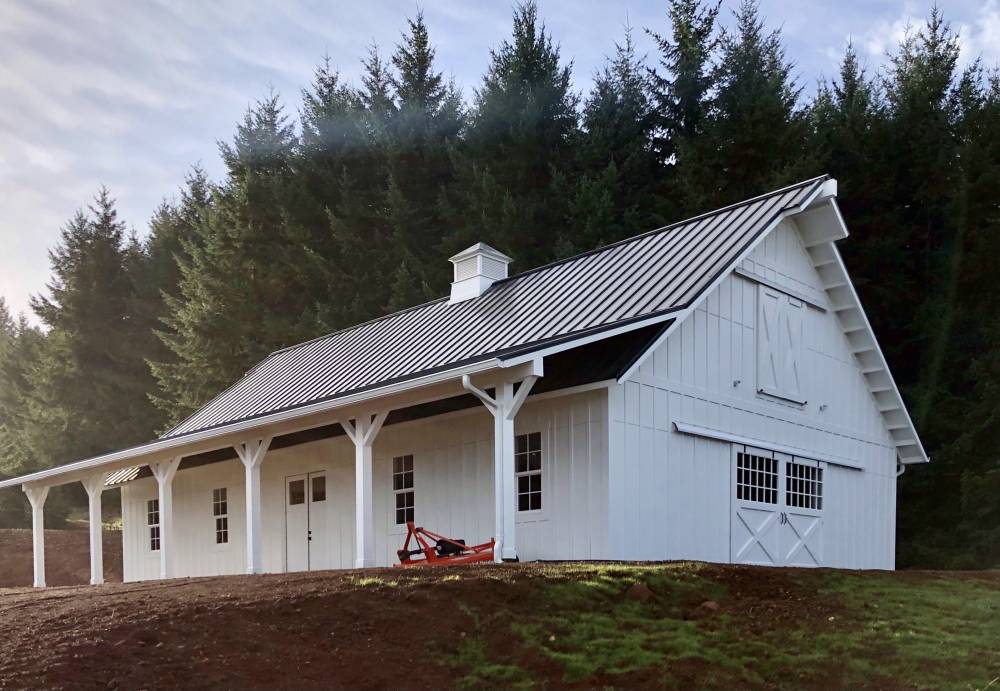
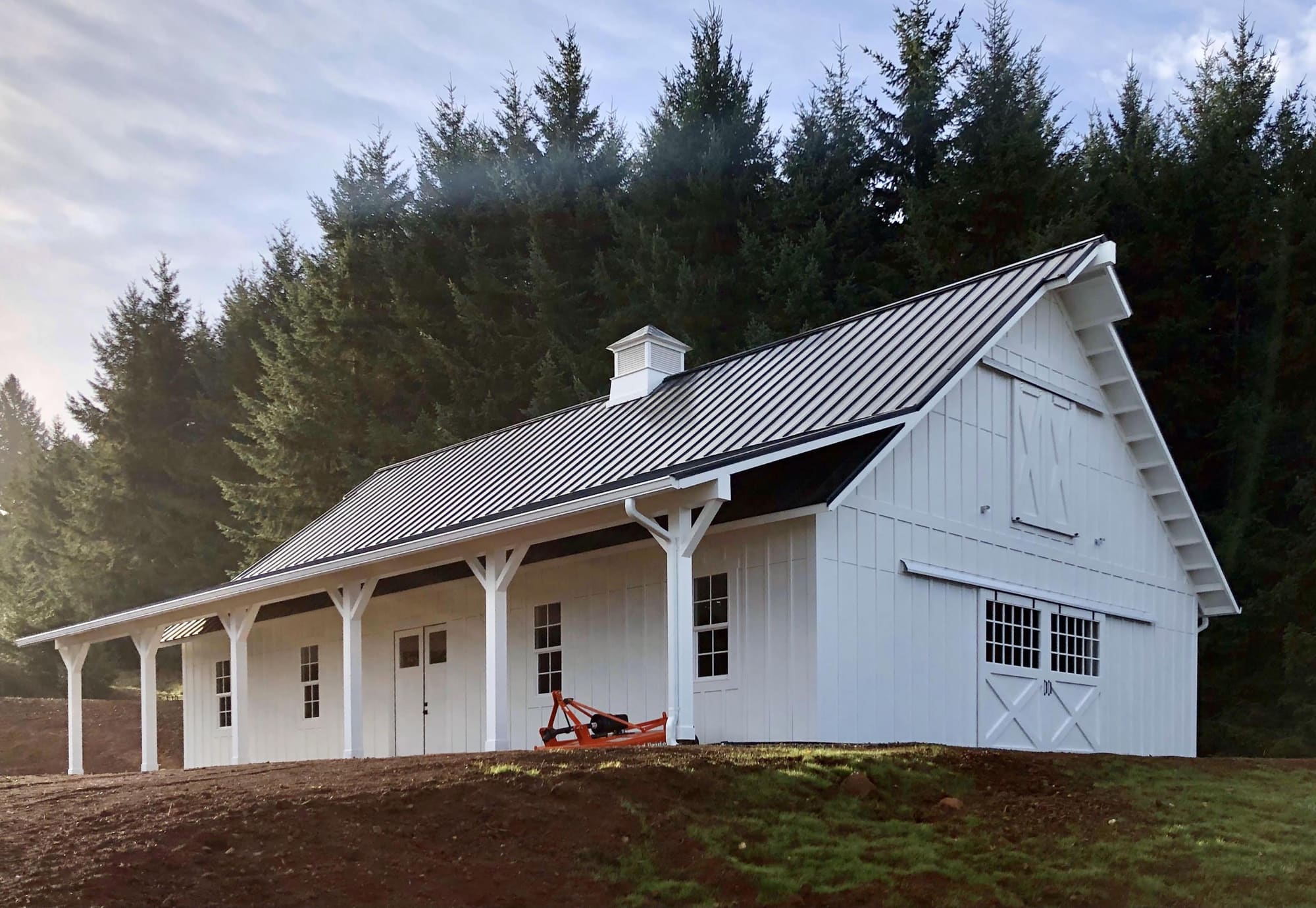
Living quarters and a working shop under one roof.
A post-frame envelope, split between a residential wing and a shop or barn wing, joined under a single roof line. Cheaper than building a separate house and shop, and easier to live with than either one alone.
Common patterns
Shop with attached living wing
Most of the envelope is shop; a 20×40 to 24×40 living wing runs along one side or end.
Balanced barndominium
Roughly half living, half shop, with the living side as the primary residence.
Stall barn with apartment
Equestrian stall barn with a dwelling unit at the gable end or in a second-story loft.
Multi-generational barndo
Primary residence on one side, ADU or in-law suite on the other, shop in between.
What's in the base, what gets added
Base envelope
- Engineered post layout, stamped plans
- Scissor trusses for vaulted living-area ceilings
- Commercial girts for interior finish
- Steel roofing and siding
- Separate roof pitch over living wing (when specified)
Common barndo additions
- Insulation package — R-21+ walls, R-30+ roof
- Interior framing for living quarters (subcontracted)
- Rough-in sleeves for plumbing, electrical, HVAC
- Polycarbonate eave panels for daylight in the shop side
- Overhead doors per shop bay
- Windows and exterior doors sized for living-area code
Who barndominiums are for
- Rural property owners building primary residence plus shop
- Multi-generational families adding an ADU plus shop
- Customers consolidating house and barn into one envelope
- Working tradesmen who want to live where they work
- Equestrian property owners adding living space at the barn
- Property owners building on undeveloped acreage
Common questions about barndominiums
What is a barndominium?
A barndominium is a post-frame building that combines living quarters and a working shop or barn under one roof. The shop side keeps the cost-per-square-foot of post-frame construction; the living side is finished out to residential code. Common pattern: a 40×60 envelope with a 24×40 living wing and a 16×40 shop wing, joined under a single roof line.
Do I need a county permit for a barndominium?
Yes. Anything with residential occupancy requires a county-permitted, engineer-stamped build — the agricultural exemption does not apply. The permitting process is the same as for a stick-framed house: site plan, structural plans, residential code compliance, inspections. We coordinate with your engineer or the architect of record on the structural side.
What is the difference between a barndominium and a shop-with-living-quarters?
Same envelope, different program. A shop-with-living-quarters is mostly a shop with a small dwelling area inside; a barndominium is roughly balanced living-to-shop, often with the living side as the primary residence. The permitting and code requirements are the same in both cases — anything with sleeping space and a kitchen is residential occupancy.
Can you handle insulation, plumbing, electrical, and HVAC?
The finish trades are licensed work and run under their own contractors. We build the envelope, the structural framing, and the rough-in coordination so the trades have clean access. Customers typically hire the trades separately on a residential project — that pattern keeps everyone in their scope and keeps the licensing clean.
What size barndominium makes sense?
Most working barndominiums land between 40×60 and 60×80 overall. The living wing typically runs 20×40 to 30×40; the shop side scales with what you keep in it. Going larger is straightforward post-frame; going smaller makes the shop side compete with the living wing for space.
How long does a barndominium project take?
The envelope itself goes up in one to ten weeks for a typical 40×60 to 60×80 building. The finish work — interior framing, drywall, kitchen, bath, flooring, electrical and HVAC — runs after we finish the shell and is on the residential finish trades schedule. Total project, contract to move-in, typically runs six to twelve months including permitting.
Ready to start your project?
Tell us about your land, your use, and your timeline. We typically respond within one business day.